
Purpose
The goal of the multiple analyses described in this White Paper was to determine if the use of centralized parcel locker systems would reduce vehicle miles traveled (VMT) and associated greenhouse gas (GHG) emissions.
Summary
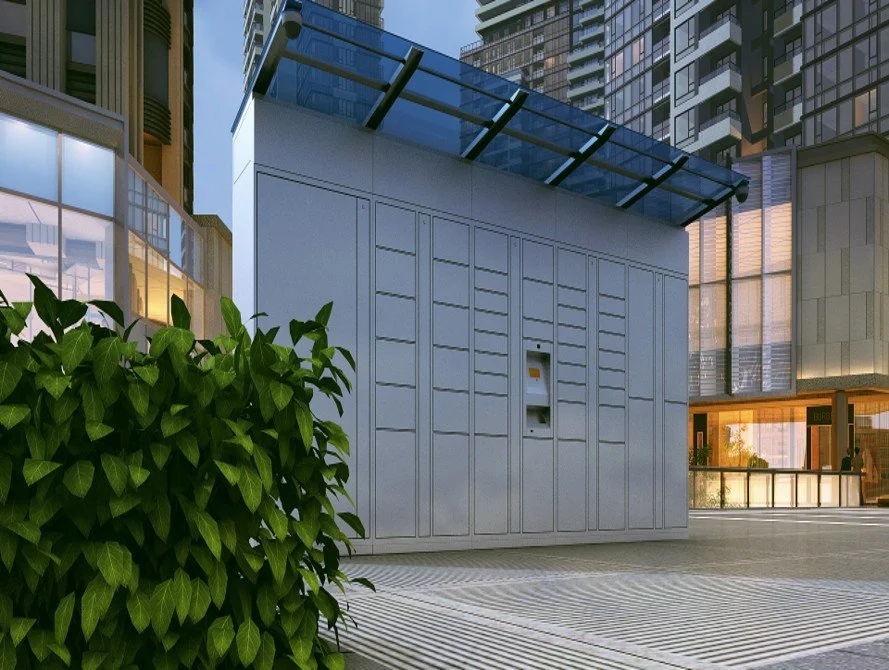
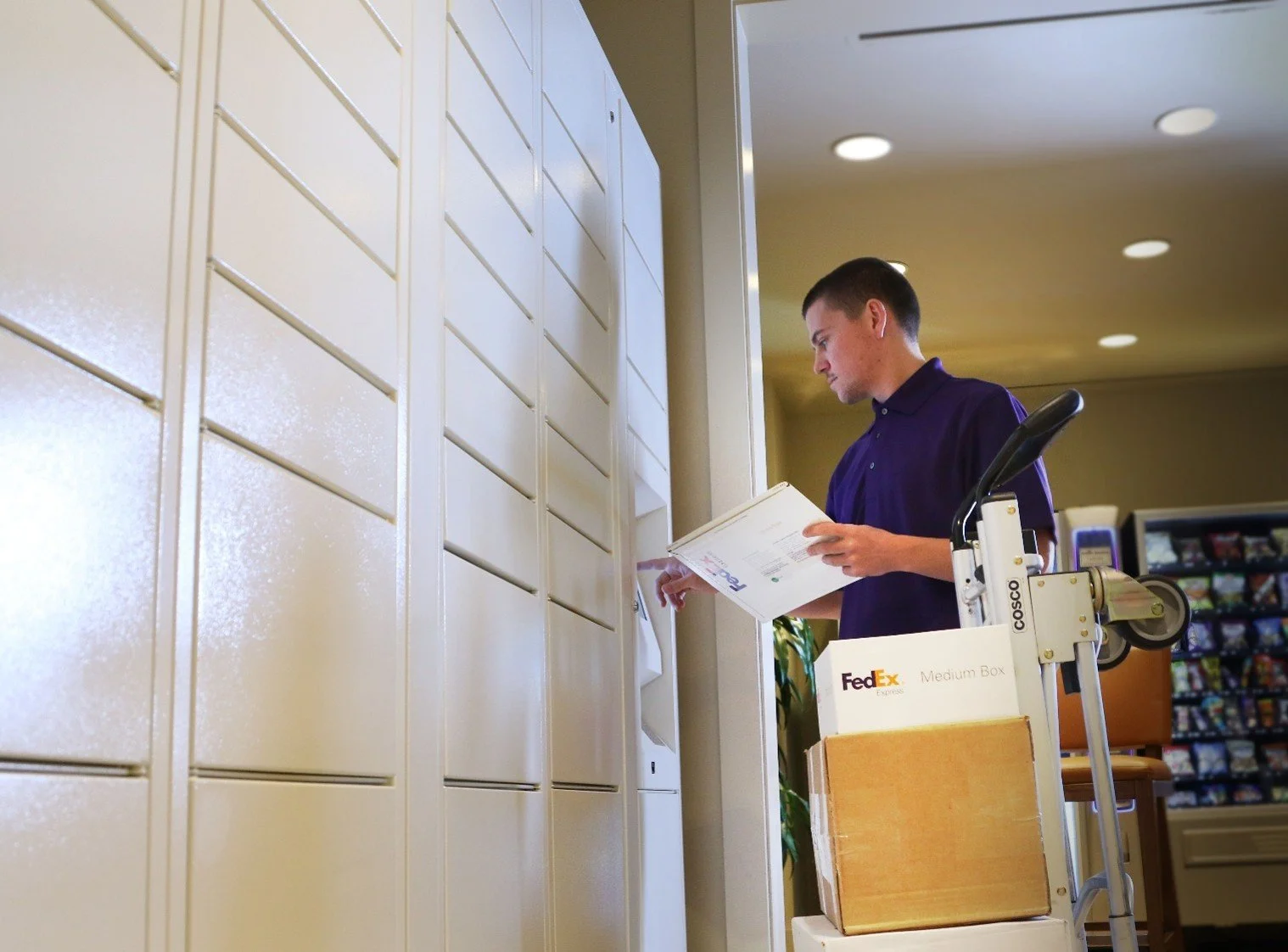
The centralized open or all-carrier parcel locker systems evaluated in this White Paper are unlike the closed or dedicated carrier locker systems that are used by only one carrier, like FedEx or UPS, or one parcel generator, like Amazon. In contrast, an open locker network system can accept parcels from multiple carriers or parcel generators. They are automated multi-compartment storage systems that enable temporary storing of parcel deliveries from multiple carriers into a secure locker until pick-up by the consumer. Delivery carriers deposit packages into any available compartment of an appropriate size within the centralized locker system, and parcel recipients then receive an electronic notification and with a unique code that allows them to open the locker compartment and retrieve their parcel or parcels at a time that is convenient for them. Centralized parcel locker systems may be placed in a variety of locations, such as residential buildings, stores, transit stations, or on a sidewalk or in other public spaces, among other options.
Both open and closed parcel locker systems are responsive to challenges created by the rapid growth in e-commerce. With annual parcel deliveries in the U.S. growing from approximately 6 billion in 2014 to approximately 22.37 billion in 2024, these deliveries are creating ever more VMT, GHG emissions, traffic and curb management issues. Online sales are expected to continue to grow by approximately 8% to 9% per year. By 2028, online sales are projected to reach approximately 20% of all U.S. retail sales, which in turn will lead to even greater VMT and GHG emissions associated with these deliveries. With this in mind, this paper sought to quantify any benefits relative to VMT and GHG that centralized parcel lockers could provide, as well as to develop formulas that could be used to calculate expected VMT reductions, and through formulaic extrapolation, GHG emission reductions.
In addition to the increasing volume of packages being shipped by online sellers, the volume of return packages is creating its own impact on VMT, and GHG emissions. According to Capital One Shopping Research, 24.5% of e-commerce packages were returned in years 2023 through 2024. Some centralized parcel lockers are capable of accepting return packages, so Versions 3.0 and 4.0 of the White Paper evaluated the positive effect such lockers could have in lowering VMT and GHG emissions associated with parcel deliveries and returns.
Summary of Findings:
For multi-family apartments with centralize parcel lockers: 0.93% reduction in parcel carrier VMT
For single-family residences with centralized parcel lockers: 0.67% reduction in parcel carrier VMT
Parcel returns by consumers in multi-family apartments with centralized parcel lockers: 3.3% reduction in consumer VMT.
Parcel returns by consumers in single-family residences with centralized parcel lockers: 2.34% reduction in consumer VMT.